
One in Four Young Black Men in Key States Are Not Yet Committed to Voting
Black Men Vote is proud to release new research conducted by HIT Strategies showing that young Black men in key 2026 states remain a decisive but misunderstood electorate heading into the midterm elections.
The survey of 1,636 registered Black male voters ages 18–45 across Georgia, Michigan, Mississippi, North Carolina, Pennsylvania, and South Carolina found that while most respondents value voting, many are not yet locked in for 2026. It is one of the largest dedicated surveys of Black men in recent public opinion polling.
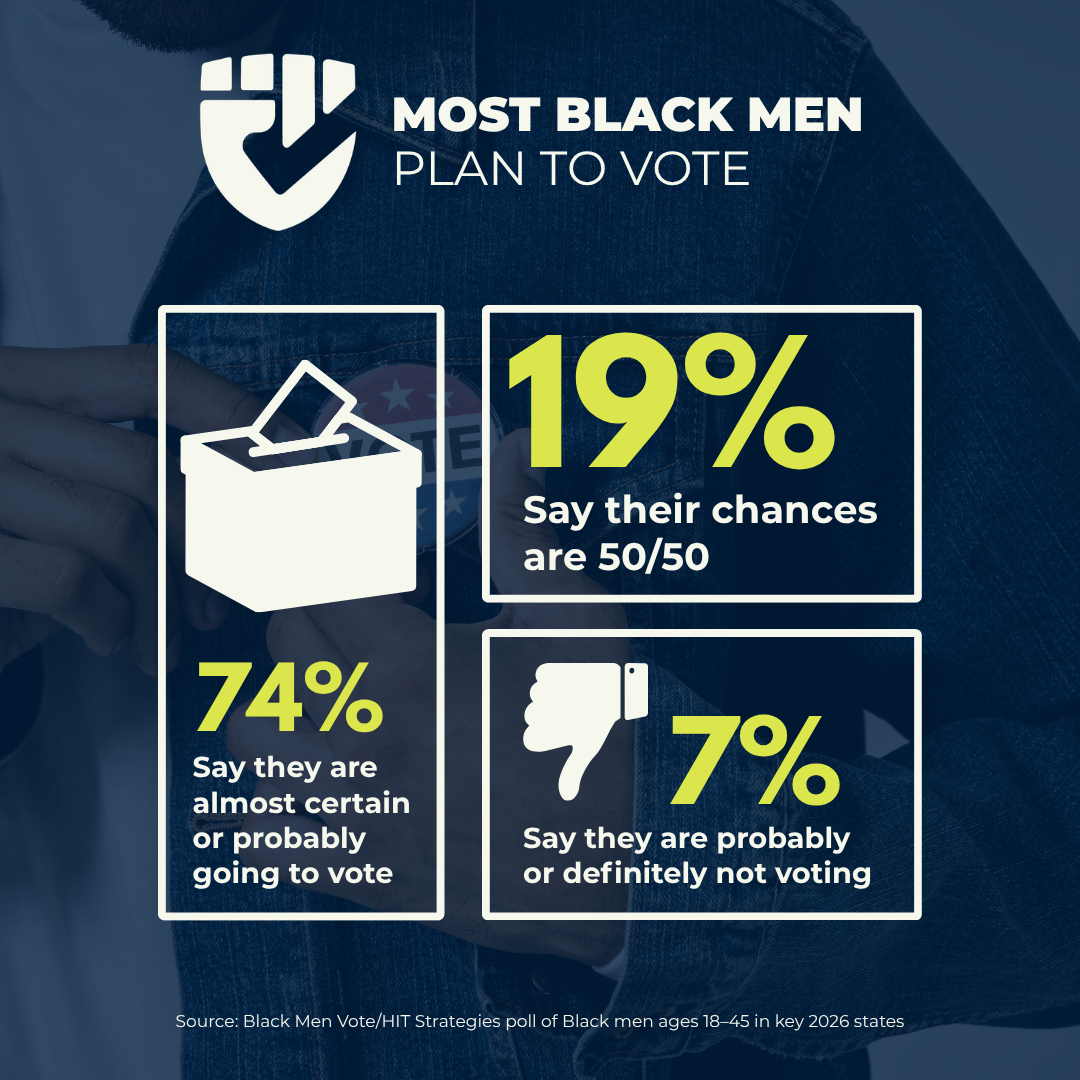
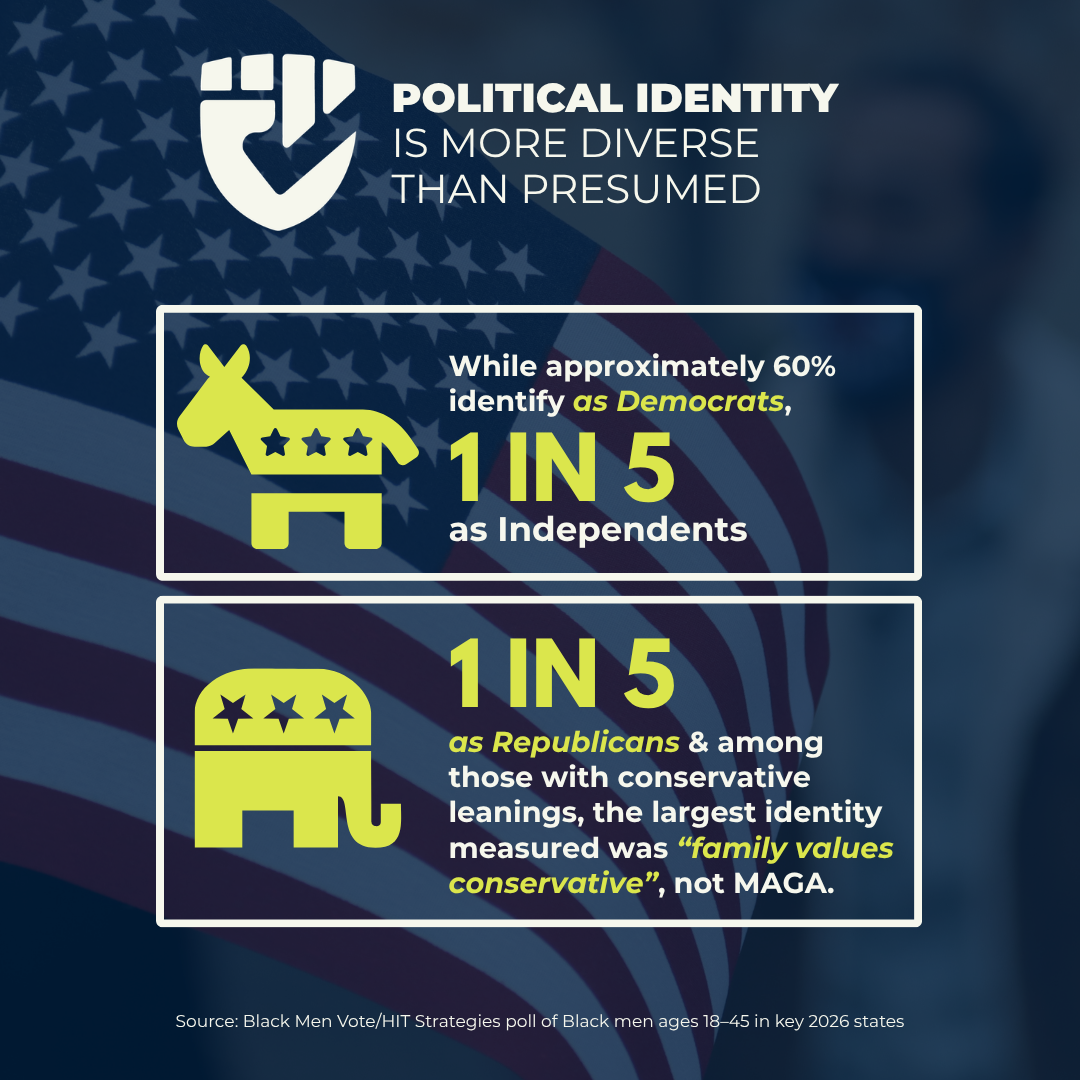
Seventy-four percent say they are almost certain or probably going to vote, while 19% say their chances are 50/50 and 7% say they are probably or definitely not voting. The survey shows that young Black men remain broadly left-of-center, but their political identities do not map neatly onto traditional party labels. While a majority identify as Democrats, one in five identify as Independents and one in five as Republicans, and among those with conservative leanings, the largest identity measured was “family values conservative,” not MAGA.
“Black men are not politically absent, they are politically misread,” said Michael Bland, Executive Director of Black Men Vote. “This research shows that young Black men remain broadly left-of-center, but they do not fit neatly into the political boxes and campaign assumptions that too often define them. They value voting, but one in four are not yet committed to participating in 2026. That should be a wake-up call: Black men are not a problem to be solved or a bloc to be chased in the final weeks of an election. They are a decisive electorate that has to be respected, understood, and engaged year-round.”
Additional insights include:
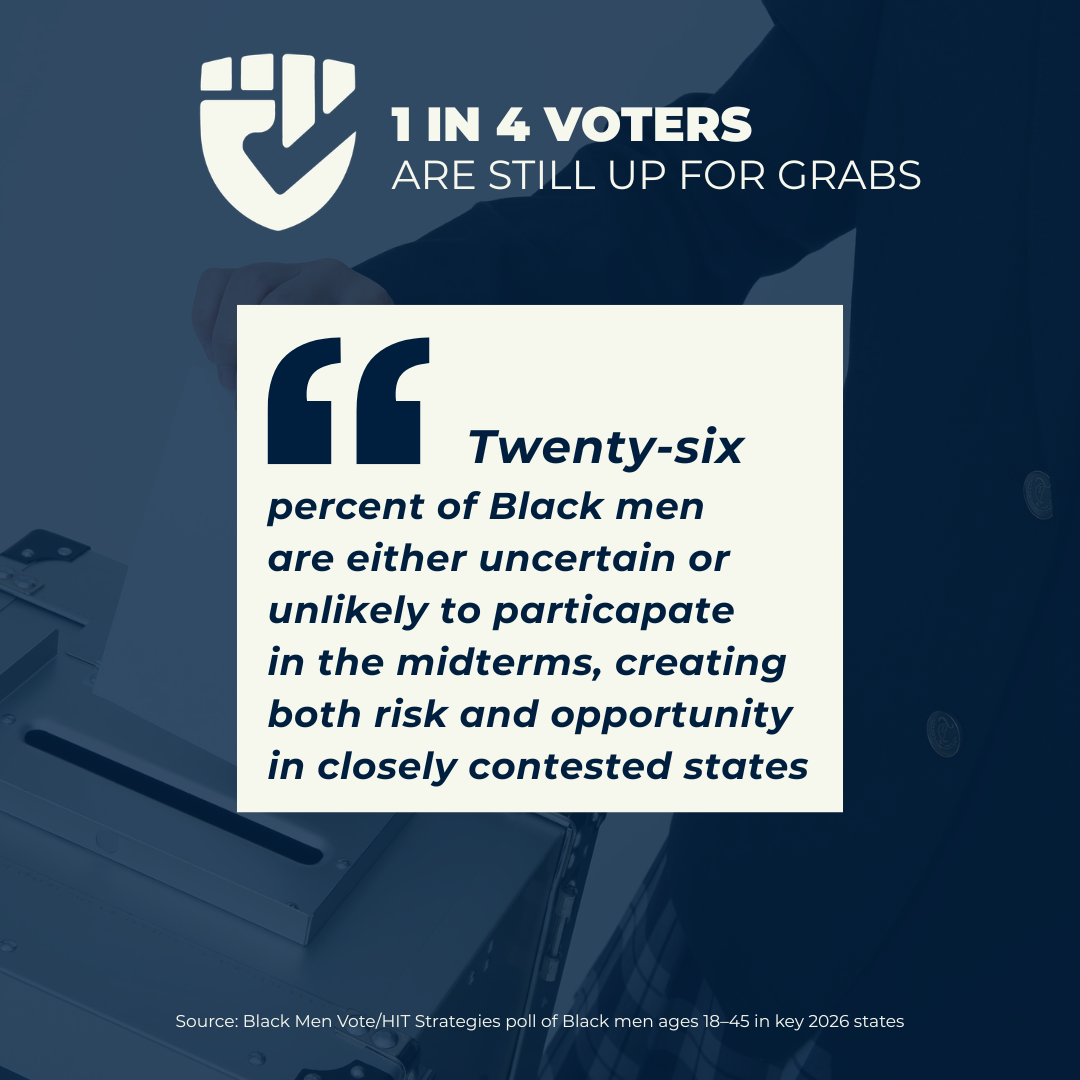
A quarter of young Black men are not locked in for 2026: Twenty-six percent are either uncertain or unlikely to participate in the midterms, creating both risk and opportunity in closely contested states.
The turnout challenge is not simply apathy: Ninety-two percent say voting is important, showing a gap between civic belief and likely midterm participation.
Party labels do not tell the whole story: The poll finds a majority-Democratic electorate with meaningful Independent and Republican identification, alongside an ideological profile that remains broadly left-of-center but more complex than traditional campaign categories suggest.
Activation may matter as much as persuasion: The poll identifies Black men who supported Democrats in 2024 but are not certain to vote in 2026, along with politically alienated voters who remain likely to participate but skeptical of both major parties.
In addition to exploring the political attitudes of younger Black men, the survey also asked respondents about their habits and preferences in news and information consumption. It found that:
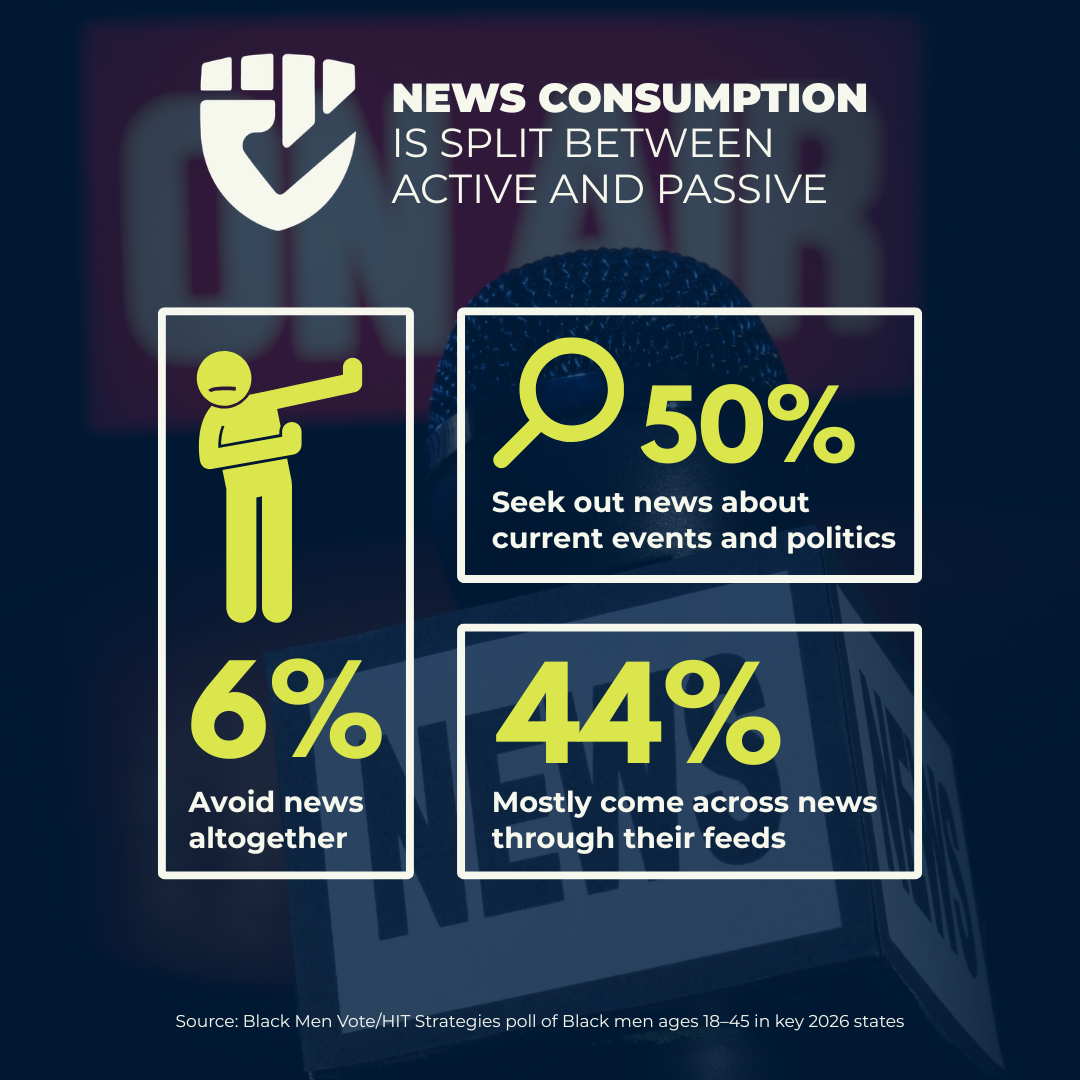
Half of young Black men are active news consumers; just 6% avoid news: Half say they seek out news about current events and politics, while 44% say they mostly come across news through their feeds. Only 6% say they avoid news altogether.
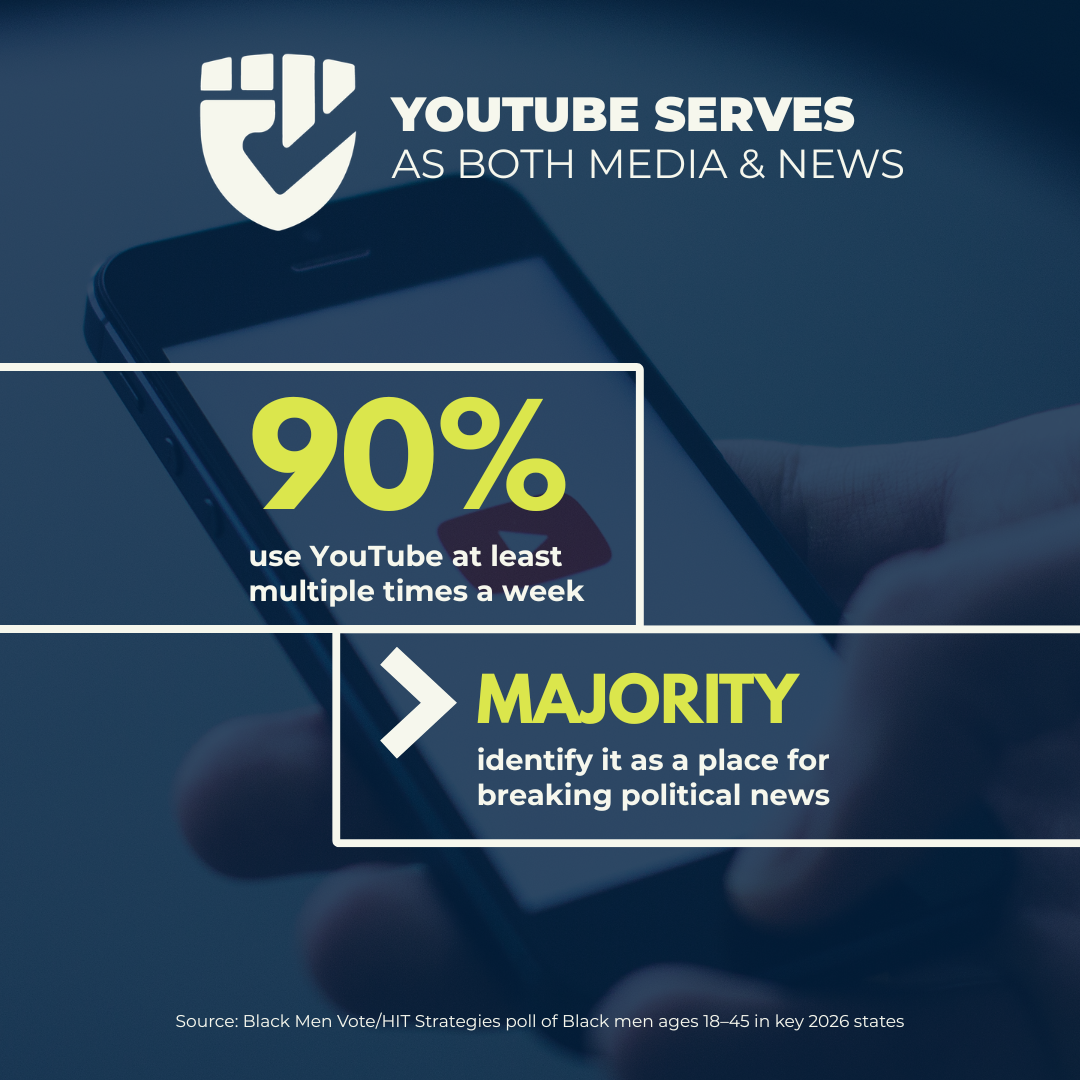
YouTube is a dominant civic information channel: Ninety percent use YouTube at least multiple times a week, and a majority identify YouTube as a place they go for breaking political news.
Culture is where politics has to compete: Respondents were most likely to stop and engage with music, humor, memes, and news content, underscoring that civic information must compete for attention in the same feeds where Black men encounter entertainment, culture, sports, gaming, and community conversation.
The research identifies six distinct segments of young Black men, ranging from highly engaged Democratic-aligned voters; to politically alienated but likely voters; 2024 Democratic supporters at risk of sitting out 2026; highly online Trump voters; and disengaged men with the lowest likelihood of participation. Together, the segments show that Black men cannot be understood through a single partisan, ideological, or turnout lens.
Why This Matters
Black men represent a critical and often misunderstood electorate in closely contested elections. This research underscores that shifts in turnout and engagement within specific segments, not just overall participation, can meaningfully influence outcomes.
The findings also highlight a growing gap between traditional outreach strategies and the ways many Black men consume information today, underscoring the need for more tailored, data-driven engagement approaches.
Explore the data, key insights, and voter segments identified in Black Men Vote’s latest poll.